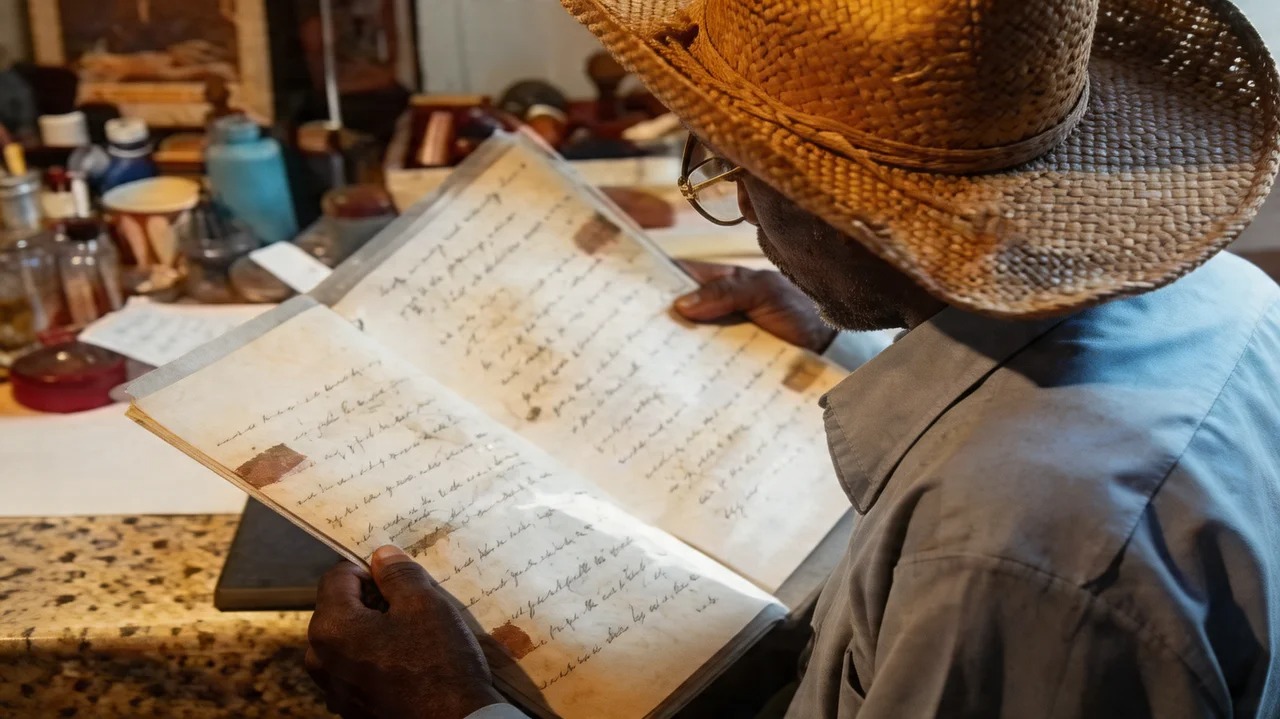
The Treaty
Articles of Pacification with the Maroons of Trelawney Town — Concluded the First of March, 1738.

The Anchor Document
The 1738 Treaty of Peace and Friendship is the foundation of the Sovereign State of Accompong and the source of authority from which the Maroon Office of the Secret Service operates.
It is not a grant of privilege. It is a recognition. The British Crown did not confer freedom on the Maroons in 1738 — it acknowledged a freedom the Maroons had already secured by force of arms, over decades of war, in a country they had never surrendered. When a sovereign power concludes peace with a people it has failed to defeat, what it signs is not a charter of liberty but a treaty between states.
That is what the 1738 Treaty is, and that is how the Office reads it.
What the Treaty Established
Stripped of eighteenth-century language, the Treaty established four things that matter to the present:
A perpetual peace between two parties. Article 1 ends hostilities on both sides for ever. The Treaty is not a ceasefire, not an armistice, and not a license subject to revocation. It is a permanent settlement between peoples.
A perpetual state of freedom. Article 2 declares that Captain Cudjoe, his captains, adherents, and men shall for ever hereafter be in a perfect state of freedom and liberty. The phrase is consequential. Freedom here is not contingent, not conditional on good behavior, and not subject to withdrawal by any successor government.
A perpetual territorial grant. Article 3 grants the Maroons 1,500 acres between Trelawney Town and the Cockpits for themselves and posterity for ever. The land is inheritable, held in common, and tied to the identity of the people rather than to individuals. This is the territorial foundation of the State.
A perpetual line of command. Article 15 fixes the succession from Cudjoe through his brother Accompong and onward — a line of command established by the Treaty itself. The office-holder changes. The office endures.
Four things, four times the word for ever. The Treaty did not create a temporary arrangement. It created a State.
On the Hard Articles
Any honest reading of the Treaty has to address Articles 6, 9, and 10. Article 6 obliged the Maroons to assist in suppressing rebels. Articles 9 and 10 required the return of persons who escaped from British custody to Maroon territory.
The Office makes no apology for these clauses and offers no revision of them.
Treaties between sovereigns have always contained provisions of this kind. Nations return deserters. Nations extradite those the other state claims. Nations decline to harbor rebels against a neighboring power with whom they are at peace. That the British Crown considered certain persons to be property is a fact of British law in 1738, not a fact the Treaty ratifies. The Treaty reflects the legal reality of the two states dealing with one another on the terms each recognized — no more, no less.
The Maroons signed as a sovereign people, bound by the obligations any sovereign undertakes when it concludes peace with a neighboring power. Those obligations were the price of the recognition secured in Articles 1, 2, 3, and 15. The price was paid. The recognition stands.
The Treaty in the Present
Three things give the Treaty continuing legal force in the twenty-first century:
Continuous existence. The State of Accompong has existed without interruption from 1738 to the present day, administering its own institutions, holding its own council, and maintaining its own offices. Continuity is what distinguishes a surviving sovereign from a historical curiosity.
International recognition of indigenous institutions. ILO Convention 169 — the binding international treaty on the rights of indigenous and tribal peoples — recognizes the right of indigenous peoples to retain and develop their own customs, institutions, and customary law. Under this framework, the institutions established under the 1738 Treaty are not merely historical; they are internationally protected.
Contemporary acknowledgement. The standing of the State and its offices has been publicly acknowledged by the Office of the Chief, First Among Equals, and recognized in the ongoing operation of the Council, the Secretariat, and the subsidiary offices of the State — including this one.
The Text
What follows is the full text of the 1738 Treaty, article by article, with a plain-language gloss. Eighteenth-century spelling is preserved.
Preamble
In the name of God, Amen. Whereas Captain Cudjoe, Captain Acompong, Captain Johnny, Captain Cuffee, Captain Quaco, and several other Negroes, their dependents and adherents, have been in a state of war and hostility, for several years past, against our sovereign lord the King, and the inhabitants of this island; and whereas peace and friendship among mankind, and the preventing of effusion of blood, is agreeable to God, consonant to reason, and desired by every good man; and whereas his Majesty George the Second, King of Great Britain, France, and Ireland, and of Jamaica Lord, Defender of the Faith, &c. has by his letters patent, dated February the twenty-fourth, one thousand seven hundred and thirty-eight, in the twelfth year of his reign, granted full power and authority to John Guthrie and Francis Sadler, Esquires, to negotiate and finally conclude a treaty of peace and friendship with the aforesaid Captain Cudjoe, and the rest of his captains, adherents, and others his men; they mutually, sincerely, and amicably, have agreed to the following articles:
The Crown acknowledges Cudjoe and his captains by name, names the war they have waged, and sends commissioners with full authority to conclude a treaty of peace and friendship. The form is the form of a negotiation between states.
Article 1
That all hostilities shall cease on both sides for ever.
Permanent peace. Not a truce.
Article 2
That the said Captain Cudjoe, the rest of his captains, adherents, and men shall for ever hereafter in a perfect state of freedom and liberty, excepting those who have been taken by them, or fled to them, within two years last past, if such are willing to return to their said masters and owners, with full pardon and indemnity from their said masters or owners for what is past; provided always that, if they are not willing to return, they shall remain in subjection to Captain Cudjoe and in friendship with us, according to the form and tenor of this treaty.
A perpetual state of freedom for Cudjoe’s people. Persons who had come to Maroon territory within the two preceding years could choose to return to British territory with pardon, or remain in Maroon territory under Cudjoe’s authority. The choice was the person’s own.
Article 3
That they shall enjoy and possess, for themselves and posterity for ever, all the lands situate and lying between Trelawney Town and the Cockpits, to the amount of fifteen hundred acres, bearing northwest from the said Trelawney Town.
A perpetual territorial grant — for the people and their posterity, without term.
Article 4
That they shall have liberty to plant the said lands with coffee, cocoa, ginger, tobacco, and cotton, and to breed cattle, hogs, goats, or any other flock, and dispose of the produce or increase of the said commodities to the inhabitants of this island; provided always, that when they bring the said commodities to market, they shall apply first to the customs, or any other magistrate of the respective parishes where they expose their goods to sale, for a license to vend the same.
Economic rights — cultivation, livestock, and trade with the island. A licensing requirement for market sales.
Article 5
That Captain Cudjoe, and all the Captain’s adherents, and people now in subjection to him, shall all live together within the bounds of Trelawney Town, and that they have liberty to hunt where they shall think fit, except within three miles of any settlement, crawl, or pen; provided always, that in case the hunters of Captain Cudjoe and those of other settlements meet, then the hogs to be equally divided between both parties.
Residence in Trelawney Town. Hunting rights island-wide, with a three-mile exclusion around settlements. Shared take where hunting parties meet — a protocol between peoples who share a landscape.
Article 6
That the said Captain Cudjoe, and his successors, do use their best endeavors to take, kill, suppress, or destroy, either by themselves, or jointly with any other number of men, commanded on that service by his excellency the Governor, or Commander in Chief for the time being, all rebels wheresoever they be, throughout this island, unless they submit to the same terms of accommodation granted to Captain Cudjoe, and his successors.
An obligation to act against rebels against the Crown. A sovereign at peace does not harbor the enemies of the sovereign with whom it has made peace. This is the ordinary price of a treaty between neighboring powers.
Article 7
That in case this island be invaded by any foreign enemy, the said Captain Cudjoe, and his successors hereinafter named or to be appointed, shall then, upon notice given, immediately repair to any place the Governor for the time being shall appoint, in order to repel the said invaders with his or their utmost force, and to submit to the orders of the Commander in Chief on that occasion.
Mutual defense against foreign invasion. The Maroons undertake to defend the island against external enemies — a reciprocal obligation between allies.
Article 8
That if any white man shall do any manner of injury to Captain Cudjoe, his successor, or any of his or their people, they shall apply to any commanding officer or magistrate in the neighbourhood for justice; and in case Captain Cudjoe, or any of his people, shall do any injury to any whiter person, he shall submit himself, or deliver up such offenders to justice.
Reciprocal access to legal process across the jurisdictional line — a provision recognizing each side’s standing to seek justice from the other.
Article 9
That if any negroes shall hereafter run away from their masters or owners, and shall fall into Captain Cudjoe’s hands, they shall immediately be sent back to the chief magistrate of the next parish where they are taken; and these that bring them are to be satisfied for their trouble, as the legislature shall appoint.
A provision for the return of persons claimed by the Crown as property under its own law. The Treaty does not adopt that law. It reflects the terms under which the two sovereigns dealt with one another in 1738. Treaties return what the other sovereign claims.
Article 10
That all negroes taken, since the raising of this party by Captain Cudjoe’s people, shall immediately be returned.
A companion provision to Article 9, covering persons taken during the conflict preceding the Treaty.
Article 11
That Captain Cudjoe, and his successors, shall wait on his Excellency, or the Commander in Chief for the time being, every year, if thereunto required.
An annual protocol between heads — a mark of continuing relations between states, not of subordination. Ambassadors wait on other sovereigns.
Article 12
That Captain Cudjoe, during his life, and the captains succeeding him, shall have full power to inflict any punishment they think proper for crimes committed by their men among themselves, death only excepted; in which case, if the Captain thinks they deserve death, he shall be obliged to bring them before any justice of the peace, who shall order proceedings on their trial equal to those of other free negroes.
Internal judicial authority over Maroon affairs — the full criminal jurisdiction of a sovereign over its own people, with the single exception of capital cases. Recognition that the State governs its own.
Article 13
That Captain Cudjoe with his people shall cut, clear, and keep open, large and convenient roads from Trelawney Town to Westmorland and St. James’s, and if possible to St. Elizabeth’s.
A public-works obligation — the maintenance of roads connecting Maroon territory to neighboring parishes.
Article 14
That two white men, to be nominated by his Excellency, or the Commander in Chief for the time being, shall constantly live and reside with Captain Cudjoe and his successors, in order to maintain a friendly correspondence with the inhabitants of this island.
Two resident envoys from the Crown. The word the Treaty uses is correspondence — not oversight, not governance. These are ambassadors between peoples, not governors set over them.
Article 15
That Captain Cudjoe shall, during his life, be Chief Commander in Trelawney Town; after his decease the command to devolve on his brother, Captain Accompong; and in case of his decease, on his next brother Captain Johnny; and, failing him, Captain Cuffee shall succeed; who is to be succeeded by Captain Quaco; and after all their demises, the Governor, or Commander in Chief for the time being, shall appoint, from time to time, whom he thinks fit for that command.
The line of succession. Cudjoe is Chief Commander for life; the command then passes to his brother Accompong, then to Johnny, then to Cuffee, then to Quaco. The final clause — that after their deaths the Governor shall appoint — is the clause under which successive generations of Maroons have asserted their own continuing authority: the right of a people to name its own leaders is foundational to sovereignty, and has been exercised continuously by the Accompong Maroon Council in succession to the original captains.
In testimony, &c. &c.
Concluded the first day of March, 1738, between Colonel John Guthrie and Captain Cudjoe, on behalf of their respective parties, under the cotton tree afterwards known as the Kindah Tree.
On the Keeping of the Treaty
Under the stewardship of Henry Octavius “Mann O” Rowe, Secretary of State of the Accompong Maroon Council from 1923 until his passing in 2006, the Treaty was kept as the founding record of the State. Following the re-establishment of this Office in 2014 under Secretary of State David Errol of the Family Holmes, that responsibility continues.
The Office stands guard over the Treaty, the offices it established, and the standing of the State that endures under it — for the Born and the Unborn.